Showing posts with label Cashmere. Show all posts

Thursday, 4 June 2020

A Bunch Of Total Morons

Update on Nepal.

The Maoist government of Nepal has decided that the lock down should continue to 16th June.

So it looks like our factory will stick with 30% of staff for the time being.

I assume they have never heard of Belarus or Sweden, or seen any of the evidence that has accumulated since January that this virus is only slightly worse than the flu. 

So they continue to destroy the Nepalese economy. How do they even get in to power having named themselves after the biggest murdered in the history of planet earth. It's totally insane. 

You can visit your bank for 4 hours per week, split between 2 hours on 2 days. So I assume those two hours will be nice and crowded (a bit like when they cut services on the London underground) .

These people in power in every country are completely stupid about everything.  The exception is that they are not bad at enriching themselves or presenting themselves as the least bad option. 

This idiocracy is only possible with fiat money printing and passing debts on to your children. Voting does nothing. All the teams are as stupid and corrupt as each other, especially once they get in to power.

Buy Bitcoin. 

To misquote Hayek, ' we shall never have sound money again until in some sneaky round about way we come up with our own money ' . Sound money is the root of freedom and prosperity.

#Bitcoin. #Nepal

This image is the colonnade in Marianske Lazne, a spa town in Czech Republic, which we visited last week. It was built from cast iron and is beautiful. It is not a coincidence that it was built towards the end of a long period of sound money.


Sunday, 29 September 2019

How Cashmere Is Made - Video


I thought this video by Business Insider contains very good information about where cashmere comes from.

Transcript below:

- [Narrator] Cashmere is one of the most
sought-after fibers in the world.
Its fine hairs are softer, lighter
and can be up to three times more insulating
than sheep wool.
It's been a prized material for centuries,
but its quality comes at a cost,
and a luxury cashmere jumper could cost you
well over $500.
So why is it so expensive?
Cashmere doesn't come from a sheep
like you might think, but from the cashmere goat.
These goats are found across the Himalayas
where temperatures can drop to minus 30 degrees,
and their freezing cold habitat
means they grow an incredibly thick, warm coat.
It's not the outer hair you can see
that's used for making garments,
but the super soft coat just underneath it.
Johnstons of Elgin has been making cashmere
products since 1851, and to do that,
they need a lot of goats.
- We are using the cashmere from about 1.2 million goats,
and those goats are spread right over Outer Mongolia,
China, a little bit in Afghanistan as well.
- [Narrator] There's a reason so many goats are needed.
While a sheep can produce at least three kilos
of wool each year, a cashmere goat
will only give you around 200 grams.
- So basically, this much cashmere from every goat.
For a scarf, we could be working with
the production of a single goat,
but for a jumper, for example,
you could be working with five, eight,
10 goats' worth of cashmere.
- [Narrator] Because of the tiny amount each goat produces,
the supply is severely limited,
and the fibers can only be collected once a year.
While sheep are sheared for their wool,
cashmere goats are usually brushed
to remove the soft hairs that molt in the spring.
Even when you've harvested the fibers,
the usable weight halves once it's been stripped
of grease, dirt, and thicker hairs.
And despite its popularity,
cashmere still only makes up 0.5%
of the world's total wool production.
Once you have the pure cashmere,
processing it takes a lot of work.
The fibers are first dyed to the right color
and aerated to stop them clumping together.
Cashmere softness means that it needs to be treated
delicately throughout the whole process.
Any chemicals or overprocessing will damage the fibers.
The fibers are then carded,
a process that detangles and lines up the hairs
in thin sheets so that they can be spun into a yarn.
The quality of cashmere is graded on its fineness
and its length, and a high-quality individual
cashmere hair can be as thin as 14 micrometers.
When it's finally ready, this dyed and spun yarn
can then be used to make everything
from jumpers to scarves.
- When you're making a cashmere scarf,
everybody thinks this is the most simple
product in the world.
And of course, when they come to the mill
and they see how it's actually done,
they realize actually there's a huge amount to it,
and there's an awful lot of hands and skilled work
that goes into making that possible.
So it is absolutely about the knowledge of the people,
about the skills of the people,
how you nurture this really delicate fiber
through the process.
- [Narrator] Cheaper cashmere products
have become hugely popular recently.
These claim to offer the quality of cashmere
for a lower price.
Some may use a slightly lower grade of cashmere
or different processing methods
to make the end result more affordable,
and while they are comparatively cheap,
they're still usually at least twice the price of wool.
There have been extreme cases of mislabeling, too,
and some supposedly 100% cashmere products
have been found to contain yak hair or even rat fur.
If you do find a really cheap product
that claims to be cashmere,
it may be too good to be true.
- There is nothing in the world like cashmere.
I mean, there are other precious fibers
or other fine fibers, but cashmere has great properties.
It's very strong. It is very warm.
It's very soft, and you can make from it
anything from a very thick, robust,
almost rug-like product through to
very fine, wispy, cloud-like,
very, very subtle pieces.
There are other precious fibers out there,
there are other fibers that are as fine,
but we can't do as much with them.

Wednesday, 25 September 2019

Ordering Bespoke Pashminas From Mypashmina.co.uk

BESPOKE PASHMINAS

Not only can you choose your perfect colour and perfect size, but you also get to choose how the pashmina is finished. Your new pashmina will be unique in the world to you.

CASHMERE & SILK

These bespoke pashminas are made from our most popular fabric. This luxury fabric is woven from a 2ply, 28 count yarn which is 70% Cashmere and 30% Silk. The yarn is carefully woven in a tight twill weave which will drape beautifully, feel incredibly soft and is also durable, so it will last a long time.

YOUR PERFECT COLOUR

After knowing you will get the right quality, the most important decision is the colour. The MYPASHMINA swatch book contains over 100 wonderful shades. You can view them on the screen or you can order a swatch book to view real fabric swatches. You can return the swatch book at any time for a full refund, or you can keep it ready for your next order. If your perfect colour is not included in that collection, you are welcome to send us a sample to match or to give us the pantone reference. This service is useful for individuals and also for weddings and corporate events, where a particular shade is important.

YOUR STYLE OF FINISHING

Your bespoke pashmina can be made with tassels or an open fringe or even a hemmed edge.
Open Fringe
Classic Hand Twisted Tassles
Hemmed Edges
If you have any requirements outside of the options listed here, then please do not hesitate to get in touch.

DELIVERY FOR BESPOKE PASHMINAS

Delivery takes from three to six weeks for bespoke pashminas. We will keep you updated regularly. During October each year delivery may take an extra 7-10 days due to annual Dashain festival in Nepal.

ALWAYS POPULAR

Bespoke pashminas are some of the most popular items available from Mypashmina. When you take delivery of a high quality pashmina that has been especially made and is unique in the world, you will be understandably pleased.
Please read some of the reviews below to see why customers come back time and time again to buy a bespoke pashmina from Mypashmina. It all comes down to choice and reliable quality.

MADE WITH CARE

Bespoke Pashminas - 70% Cashmere / 30% Silk 7
We have been working with the same people in Kathmandu (Nepal) since 2002, and your purchase helps provide decent long term jobs to more than 50 people. Staff turnover is exceptionally slow because it is a nice place to work. But we want you to buy from us because you will love your new pashmina for its quality, colour and feel

https://www.mypashmina.co.uk/product/bespoke-7030-classic-pashmina/

Tuesday, 12 March 2019

Shawl - A History in 7 Interesting Sections

Shawl

The shawl is an important and interesting part of human history and culture. In this guide we will take a look at the origins of the shawl, how it is used and some of the many types that are available today.

The Origins Of The Shawl

A shawl is simply a woven rectangle of fabric. People have been weaving fabrics for a long time.
The earliest evidence found to date comes from fabric imprints in clay which are about 27000 years old. They were found in the Czech Republic. The article didn’t say where, but I am assuming Pavlov.
Pavlov I in southern Moravia is the most complete and complex Gravettian site to date, and a perfect model for a general understanding of Gravettian culture. Gravettian peoples stretched from Russia to Spain from 29000 to 22000 years ago.
A detailed examination of the impressions reveals a large variety of weaving techniques. There are open and closed twines, plain weave and nets. Twining can be done by hand but plain weave needed a loom. A plain weave piece of fabric could have been a shawl. We will get on to how they might have been used later.

A ring shawl from Mypashmina. Made from 100% Cashmere and 60 count fine guage yarn.


If you prefer to listen to this article, then play this video.

It may be that many stone artifacts found in settlements may not be objects of art as had been supposed but parts of an ancient loom, which should now be considered as the first machine to be made after the wheel and aids such as the axe, club, and flint knife.
The academic who studied this claims that the evidence of net making implies that women were catching foxes with them. Seems like a bit of a leap of faith to fit a cultural marxist feminist agenda, but interesting nonetheless.

History and Etymology for Shawl

The word shawl first appeared in English in 1662. I can’t find the exact source of this, but I assume it came in to use due to trade with Persia or India.
The word comes from the From Persian شال‎ (šâl). It is similar to the Sanskrit शाटी (śāṭī). Some sources claim the word originated in the 14th century. The oversimplified version of that story is that a persian man travelled to Ladakh and made a shawl.
It appears that from quite early on, that a shawl was more than just a regular wrap. It was something more prestigious, and linked to higher quality yarns such as cashmere. Wrap was in English since the early 14th century.

This image came from The North American Indian by Edward S. Curtis. These images were published between 1907 and 1930.

Definition of Shawl

Merriam Webster defines shawl as: a square or oblong usually fabric garment or wrapper used especially as a covering for the head or shoulders.
Wikipedia describes a shawl as : A shawl (from Persianlang-Urdu شال‎ shāl,[1] which may be from Hindiदुशाला duśālā, ultimately from Sanskrit: शाटी śāṭī[2]) is a simple item of clothing, loosely worn over the shoulders, upper body and arms, and sometimes also over the head. It is usually a rectangular or square piece of cloth, which is often folded to make a triangle, but can also be triangular in shape. Other shapes include oblong shawls.
The cloth can be made from almost any fibre or material. The limit to this is that it should be relatively lightweight. Too thick and it is a blanket.
With regards to size, there is no precise definition. If it is too small it is a cashmere scarf and if it is too big then it would be a throw or blanket.

Types of Shawl

There are many types of shawl. The range of possible materials, designs, sizes, shapes and colours is practically infinite. We will look here at some of the more famous types of shawl.

Embroidered Shawls

Kashmir, in India, is famous for these. However, I have to say that finding a genuine high quality cashmere shawl with genuine silk embroidery is very difficult. Kashmir seems to be full of con men and scammers.

Jacquard Shawls

The jacquard loom was invented by Joseph Marie Jacquard in 1804.The loom was controlled by a “chain of cards”; a number of punched cards laced together into a continuous sequence. The resulting pattern in the fabric of the shawl catches the light and looks amazing.  We sell two types of jacquard pashminas.

Cashmere Shawls

Cashmere is often associated with shawls. It is really the ideal material. Soft and light and comfortable against the skin. if you take a shawl on a flight it will keep you warm, but will still pack up small enough to fit in your hand luggage easily.

Ways To Use A Shawl

The primary use for a shawl is to cover and keep warm, but there are a couple more ways they can be used.
  1. A baby carry sling. This is a common use in Nepal. A 90x200cm shawl works well enough to carry a baby, either on your side on on your back. In my experience, it is not as comfortable as the long baby carrying slings, but it works fine for short periods of time. I wouldn’t do this with a pure cashmere one, but have done it with a pashmina shawl that is 70% cashmere and 30% silk.
  2. A baby hammock . A hammock is a great place for a baby. It keeps the baby clear of the ground and away from ants. Babies like the rocking motion and find it soothing. A shawl can quickly be turned in to a hammock with some bits of rope tied at the ends. You can hang it under a table. I have done this too 🙂
  3. As a bag. If it works to carry a baby, think what else you could carry. The advantage is that you can lay it flat, fill it with stuff, then fold it up to close it.  I have also done this. I suppose in 17 years of carrying shawls around, occasionally they have to be put to work in the less luxurious ways.

This portrait of Jacquard was woven in silk on a Jacquard loom and required 24,000 punched cards to create (1839). It was only produced to order. Charles Babbage owned one of these portraits; it inspired him in using perforated cards in his analytical engine.[1] It is in the collection of the Science Museum in London, England.

Shawl Manufacturing In The UK

John Kay invented the flying shuttle in 1733.  The flying shuttle used in Nepal today to weave a pashmina shawl, looks identical to the one John Kay invented all those years ago.
John Kay was born in 1704 in Lancashire. He apprenticed with a hand-loom reed maker, but is said to have returned home within a month claiming to have mastered the business. He designed a metal substitute for the natural reed that proved popular enough for him to sell throughout England. 
He continued to design improvements to textile machinery; in 1730 he patented a cording and twisting machine for worsted.
In 1733,  he received a patent for his most revolutionary device: a “wheeled shuttle” for the hand loom. It greatly accelerated weaving, by allowing the shuttle carrying the weft to be passed through the warp threads faster and over a greater width of cloth.  It was designed for the broad loom, for which it saved labour over the traditional process, needing only one operator per loom – rather than two.
Kay always called this invention a “wheeled shuttle”, but others used the name “fly-shuttle” (and later, “flying shuttle”) because of its continuous speed, especially when a young worker was using it in a narrow loom. The shuttle was described as travelling at “a speed which cannot be imagined, so great that the shuttle can only be seen like a tiny cloud which disappears the same instant.”
 But by September 1733 the Colchester weavers, were so concerned for their livelihoods that they petitioned the King to stop Kay’s inventions.
The flying shuttle was to create a particular imbalance by doubling weaving productivity without changing the rate at which thread could be spun,disrupting spinners and weavers alike. A weaver could now make fabric quicker than a spinner could spin the thread for it.
 Also, fly-shuttle use was becoming widespread in weaving, increasing cotton yarn demand and its price – and Kay was blamed.

Suggested Books About The Shawl

Alfrey, Penelope. “The Social Background to the Shawl.” In The Norwich Shawl. Edited by Pamela Clabburn. London: HMSO, 1995.
Clabburn, Pamela, ed. The Norwich Shawl. London: HMSO, 1995.
Journal de la Mode et du Gout. No. 11 (5 June 1790): 1–3.
Lochrie, Maureen. “The Paisley Shawl Industry.” In Scottish Textile History. Edited by John Butt and Kenneth Ponting. Aberdeen, Scotland: Aberdeen University Press, 1987.
Mackrell, Alice. Shawls, Stoles and Scarves. London: B. T. Bats-ford Ltd., 1986.
Morgan, Kenneth O. The Oxford History of Britain. Oxford and New YorkOxford University Press, 1992, 2001.
Pauly, Sarah. The Kashmir Shawl. New Haven, Conn.: Yale University Art Gallery, 1975.
Perrot, Philippe. Fashioning the Bourgeoisie: A History of Clothing in the Nineteenth Century. Princeton, N.J.: Princeton University Press, 1994.

Monday, 18 February 2019

Cashmere Hats from Mypashmina.co.uk


 Womens Cashmere Hats UK

Womens Cashmere Hats UK

Yes, we have 32 different cashmere hats in stock at the moment. Although most of our customers are women. I am male and I constantly wear one of the reversible hats. As do my wife and kids. I like it so much. You can choose which colour to show, and they are so soft and light and warm.

FREE SHIPPING. So the price you see is the total price that you pay.

Cashmere Beanie Hat

I just wanted to check the definition of a Cashmere Beanie Hat. So this is from Wikipedia. "In the United States, a beanie is a head-hugging brimless cap, with or without a visor, made from triangular panels of material joined by a button at the crown and seamed together around the sides. Commonly made of cloth or felt material, beanies may also be made from leather or silk." Our Beanie Hats are made from cashmere.

 Cashmere Beanie Hats

Cashmere Bobble Hat Womens

We don't currently have any cashmere bobble hat womens . That does seem a strange way to phrase it. We have plenty of cashmere hats, but none of them have bobbles on. I think it is a very rare thing. You would need at least 20 grams of cashmere just for the bobble, and I am not sure if people would be willing to pay the extra. Let me know..

Maybe we could make the bobble out of a cheaper material such as wool, but then most of the cashmere hat would be very soft and the bobble would be itchy.

Cashmere Gloves

 Cashmere Gloves from Mypashmina.co.uk
Cashmere Gloves are almost an essential partner to a cashmere hat. I especially like out finger on/off cashmere gloves. They are so soft and light and you can easily reveal your fingers to flick about on your phone.

We have about 7 colours of the cashmere on/off gloves in stock, and we also have some similar styles.

You can find cashmere wristwarmers, which have a cable knit design. I prefer the cashmere gloves, because it is my fingers that get the coldest.

One more benefit of cashmere gloves is how quickly they dry out if they get wet. It is amazing. If you compare it to wool gloves or other gloves you would be very surprised.

Cashmere Hat Grey

We have this grey cashmere hat in stock at the moment. It is a pure cashmere hat. It is made from 28 count, 4ply yarn with a cable-knit design. 

It is soft and light and warm and you will forget you are wearing it. I am wearing one of the reversible cashmere hats right now, and I have even got in the shower with one on my head before because I forgot it was there.

The price is just £30. Mypashmina offers much better deals than anyone else. This is mainly because of the lack of middle men. It's just us and our cashmere factory.


Cashmere Slouch Beanie

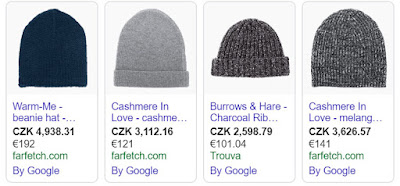
I wasn't sure what this was. I thought a cashmere slouch beanie might be simply an oversize cashmere hat, so I looked it up. I was right. But it seems that if you put the word 'slouch' next to the word 'cashmere', then that will be €120 please, thank you very much!

Cashmere Slouch Beanie

Our cashmere hats start at £30 and our double layer reversible cashmere hats are just £39.60

€192 !! wow farfetched . 

Navy Cashmere Hat

That Navy slouch Beanie might be €192 , but  Mypashmina.co.uk has cashmere hats  from just £30. They are 100% cashmere, and it is top quality cashmere as well. We regularly send it to SGS Labs to have it tested, and we have also sent cashmere yarn from competitors for testing in the past. 

I just noticed that we do not have a Navy Cashmere Hat in stock. It will be in a few weeks.

Cashmere Scarf

If you are planning to buy a cashmere scarf , then I would recommend these thick woven cashmere scarves . 

 Cashmere Scarves
Individually photographed because each one is unique and we would like you to know exactly what you are getting. These are very thick and therefore very warm.  They look smart, but they do not look boring. If you want a cashmere scarf that might last you 20 years, then I would recommend these. £100 is quite a lot of money for a scarf, but I can wander around in winter with a t-shirt and one of these scarves on an I don't feel the need for a coat. Not that I am wandering around. Sounds a bit mad.


Monday, 11 February 2019

Cashmere and Pashminas - Choose Your Colour

Which Colour Pashminas ?

We have loads of colours in stock, and now we have sorted them in to colour categories. 

It is a great way to browse pashminas. We have lots of different styles, and who would know exactly what each name we have given them actually means! 

Often we know what colour we want, but we don't know exactly which style of pashmina. 

This is why it is easy to browse cashmere by colour.

Try it. 

Click on the swatches below to see what we have!